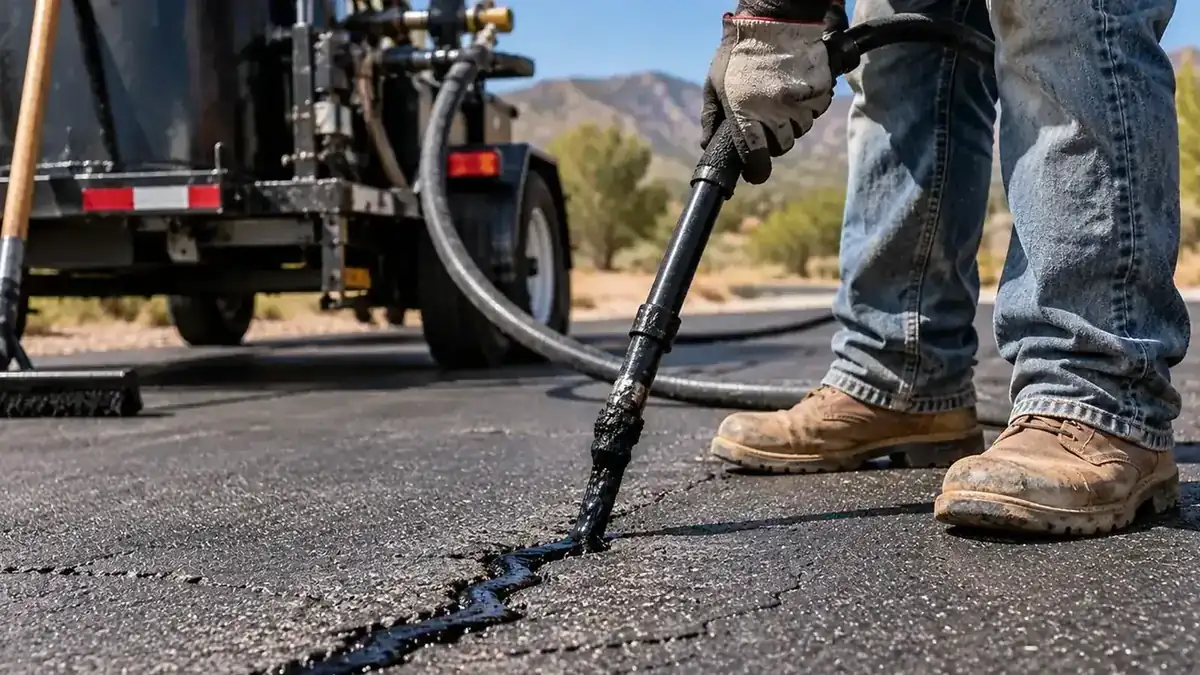
Why potholes form
Water gets through a crack, softens the base below, and traffic pushes the weakened asphalt down until it breaks out. In Los Lunas and the valley, irrigation water, clay soils and summer storms all feed this. On mesa lots, blowing sand undermines edges and opens the door.
Three ways to fix one
| Method | How long it lasts | Notes |
|---|---|---|
| Cold patch from a bag | Weeks to months | A temporary fix. Rarely bonds well. |
| Hot-mix "throw and roll" | A season or two | Better, but edges stay weak and water gets back in. |
| Saw-cut, rebuild base, hot-mix, seal seams | Many years | The permanent repair. |
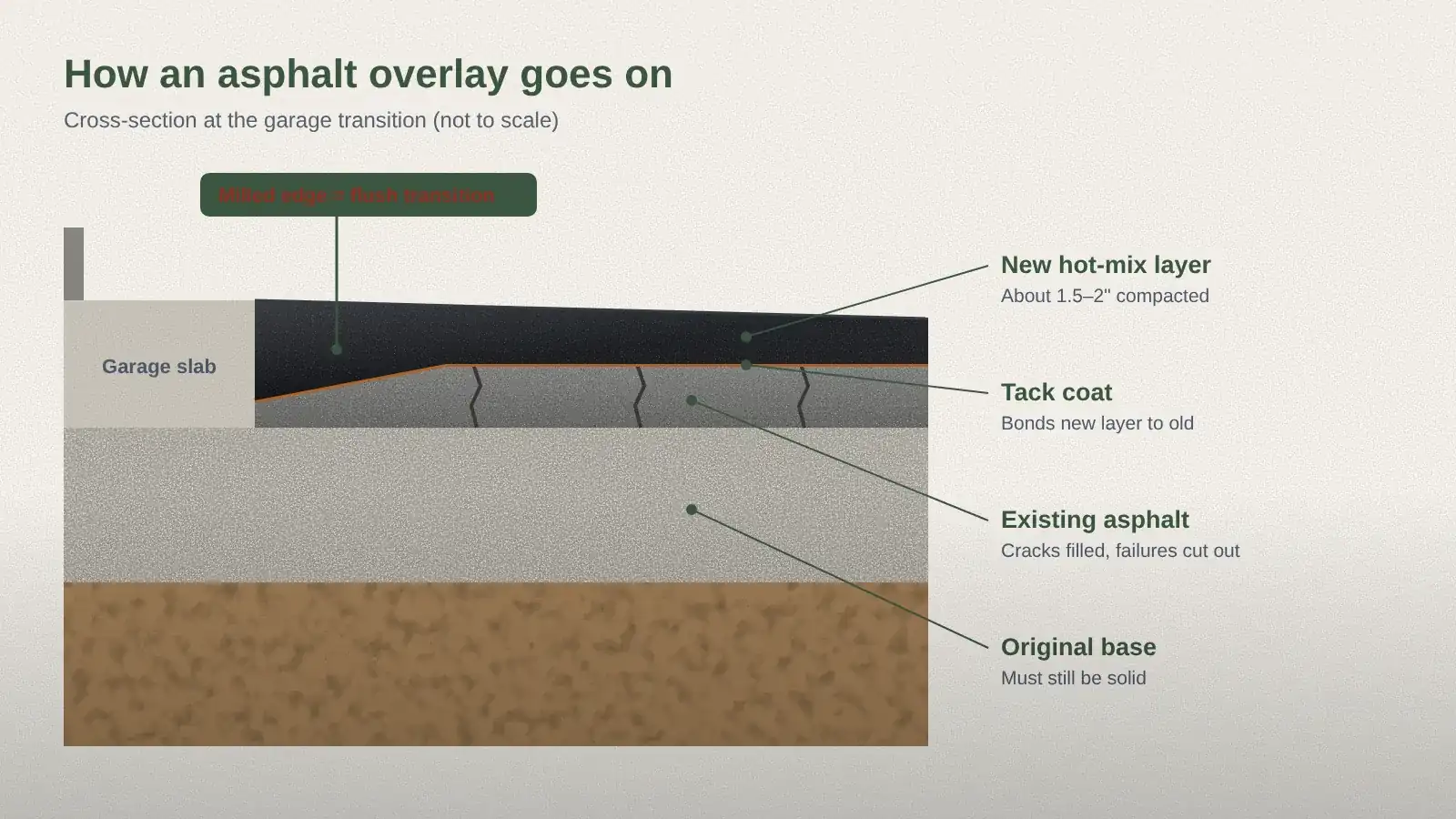
How a permanent repair is done
- Saw-cut a square around the damage, into solid asphalt.
- Remove broken asphalt and wet or soft base.
- Replace and compact base material.
- Tack coat the edges so new asphalt bonds.
- Hot-mix asphalt, placed and compacted slightly proud.
- Seal the seams with crack sealant.
What it costs
Saw-cut patches typically run about $8–$20 per square foot, with a minimum for small jobs. Several patches done at once cost less per foot than one at a time. See Los Lunas paving prices.
Find the cause
- Water draining onto the drive from a roof, lawn or field
- Unsealed cracks
- Thin asphalt where trucks turn
- Low spots that hold water
When potholes are everywhere, the whole driveway may be past patching — an overlay or replacement may be the better value. See pothole repair or call (505) 207-9982.
Common questions
Can potholes be fixed in winter?
Temporary patches can hold until spring. Permanent hot-mix repairs need warmer weather.
Why does my patch keep sinking?
The base under it wasn't replaced or the water source wasn't fixed.
Should I sealcoat after patching?
Sealcoating after repairs blends the surface and protects the whole drive.