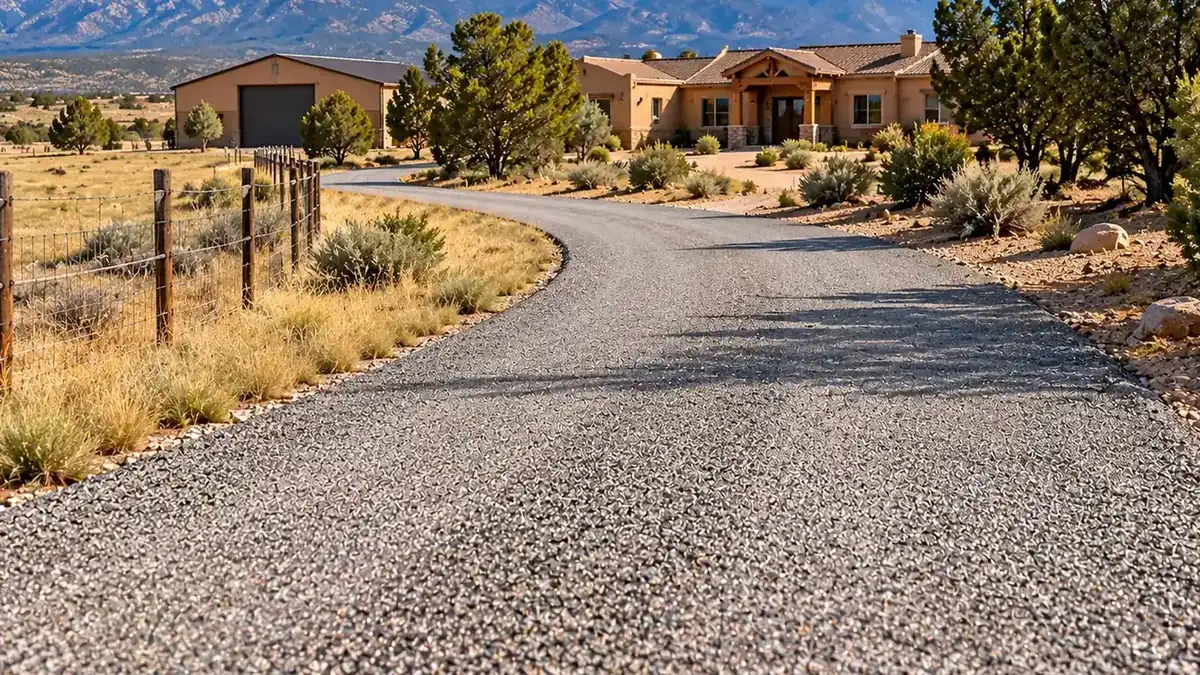
What makes ranch drives different
- Weight: loaded stock trailers, hay trucks and equipment are far heavier than cars.
- Length: a quarter mile or more is common, so cost per foot matters.
- Turning: trailers need wide gates, aprons and turnarounds.
- Water: irrigation ditches, laterals and flood irrigation next to the drive.
- Mud and dust: valley clay turns slick when wet; dry fields blow.
Surface options
| Surface | Best for | Trade-offs |
|---|---|---|
| Thick asphalt (3"+ on heavy base) | Near the house, barns, loading areas | Highest cost per foot |
| Double chip seal | Long lanes with regular truck traffic | Needs a strong base; re-chip every several years |
| Recycled millings | Long lanes on a budget, equipment yards | Rougher; edges need support |
| Base course gravel | Field roads and low-use lanes | Dust, ruts, regular grading |
Many owners mix them: asphalt where trailers turn and park, chip seal or millings for the long run out to the road. See farm and ranch drives, chip seal and millings.
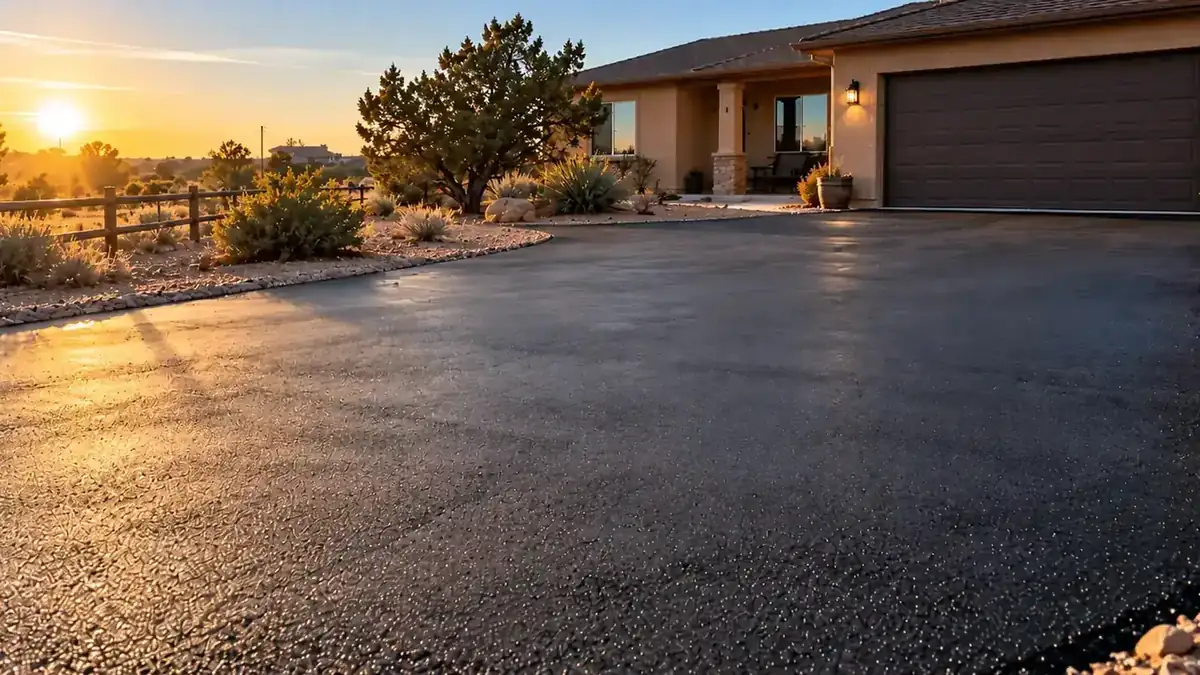
Build it for the heaviest load
- Strip topsoil and soft clay.
- Base thick enough for loaded trucks — usually deeper than a home driveway.
- Compact in lifts.
- Crown the surface so water sheds to the sides.
- Widen turns, gates and the road entrance for trailers.
Ditches and irrigation
Crossing an acequia or lateral needs a properly sized culvert and, often, the ditch association's OK. Flood-irrigated fields next to a drive soak the base, so raising the drive and adding a shoulder helps. See crossing an irrigation ditch and ditch crossings and drainage.
Call (505) 207-9982 to walk your property and price a mix of surfaces.
Common questions
How thick should asphalt be for stock trailers?
Thicker than a typical home driveway, on a deeper base. We size it to your heaviest regular load.
Can you pave just the part near the house?
Yes. A paved apron and parking area with chip seal or millings beyond is a common, cost-effective setup.
Do I need permission to put a culvert in a ditch?
Usually you'll need to coordinate with the ditch association or acequia commission first.